

Hot DIP Galvanized Steel Thrie Beam Crash Barrier


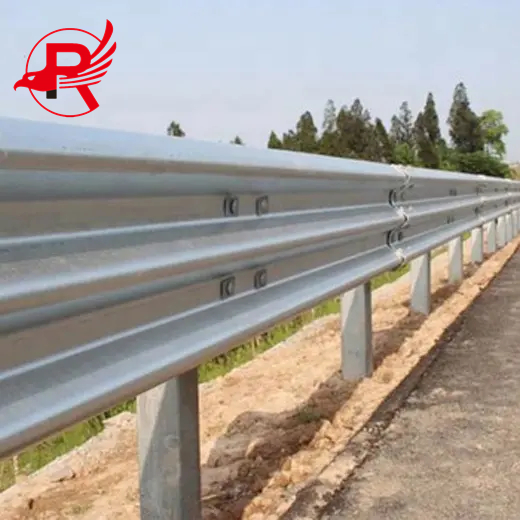
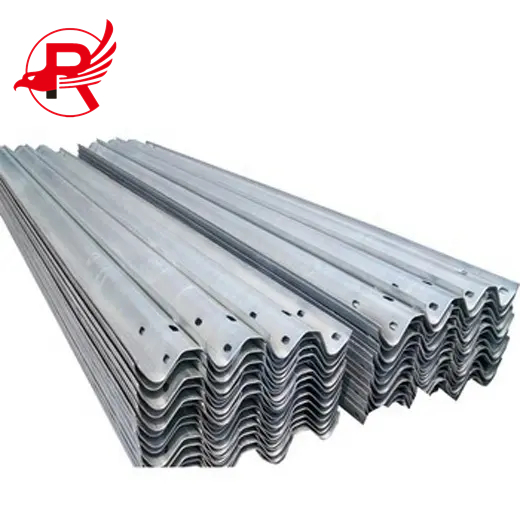


| Item | Specification Details |
| Product Name | AASHTO M180 Standard W-Beam Highway Guardrail |
| Beam Length | Standard effective lengths: 12.5 ft / 25.0 ft; custom cut lengths available per project requirements |
| Steel Thickness | Class A: 2.67 mm (0.105 inch) Class B: 3.43 mm (0.135 inch) Custom thickness options are acceptable |
| Surface Finishing | Hot-dip galvanized finish complying with ASTM A653 standard; alternative surface treatments support customization |
| Zinc Coating Grade | Type 1: Min. 550 g/m2 single-spot zinc coating Type 2: Min. 1100 g/m2 single-spot zinc coating Type 3: Uncoated raw steel Type 4: Weather-resistant steel gradeCustom coating grades available on request |
| Sample Service | Free samples are available for quality reference |
| Lead Time | 7 to 15 working days for regular orders |
| Monthly Production Capacity | 60,000 tons |
| Warranty Period | 2-year product quality warranty |
metal barrier have a wide variety of applications, including:
1. Security: Metal barriers can be used to physically protect property or prevent unauthorized access to restricted areas. They are commonly used in high security facilities such as airports, government buildings and military installations.
2. Vehicle control: metal barrier fencing such as bollards, guardrails, and gates can be used to regulate vehicle traffic and prevent accidents. They are commonly used in car parks, toll booths and construction sites.
Metal barrier feature versatile performance and fit a wide range of commercial and public scenarios, with core applications as follows:
1. Site Security & Access Protection
Metal barriers serve as reliable physical isolation facilities to safeguard private property and block unauthorized entry into restricted zones. They are extensively deployed for high-security venues, including airports, governmental premises and military bases, delivering stable and effective perimeter protection.
2. Vehicle Traffic Management & Safety Control
Various metal barrier fencing products, such as road guardrails, safety bollards and access gates, are widely applied to standardize vehicle movement and avoid traffic collisions and safety hazards. They are ideal for placement in parking lots, highway toll stations, road sections and construction sites to standardize traffic order and ensure on-site safety.


Note:
1.Free sampling, 100% after-sales quality assurance, Support any payment method;
2.All other specifications of round carbon steel pipes are available according to your requirement (OEM&ODM)! Factory price you will get from ROYAL GROUP.
The process of steel road barrier involves several steps. Here is an overview of the general process:
1. Professional Design
We adopt CAD software for standard and customized barrier design, complying with international road safety specifications and on-site installation demands.
2. Raw Material Selection
Qualified steel, aluminum and iron materials from certified suppliers are selected based on practical application and load requirements to guarantee basic product quality.
3. Precision Cutting
Raw materials are cut to exact sizes and shapes via laser, plasma and water jet cutting, ensuring neat edges and high dimensional accuracy.
4. Shaping & Forming
Steel materials are bent, rolled and stamped into standard W-beam, thrie-beam and custom barrier profiles with uniform structure and flatness.
5. Assembly Welding
Precisely fitted components are welded with professional welding techniques for solid integration, effectively preventing joint looseness and structural deformation.
6. Surface Finishing
Finished weldments undergo shot blasting, painting or powder coating treatments to remove impurities, enhance corrosion resistance and achieve a neat surface finish.
7. Quality Inspection
All finished barriers go through strict manual inspections on dimension, welding quality, surface condition and structural stability to meet industry standards before delivery.
Every procedure is strictly standardized with professional equipment and skilled workers, ensuring all steel road barriers feature stable quality, high durability and reliable performance for global infrastructure projects.
Packaging is generally naked, steel wire binding, very strong.
If you have special requirements, you can use rust proof packaging, and more beautiful.

Transportation: Express (Sample Delivery), Air, Rail, Land, Sea shipping (FCL or LCL or Bulk)

1. What are the main uses of W-beam highway guardrails?
W-beam guardrails are essential road safety facilities designed to minimize traffic risks. They effectively cushion vehicle impact forces and stop out-of-control cars from running off the road, making them ideal for highway sections, bridge approaches, road curves and other high-risk traffic zones.
2. What materials are W-beam guardrails made of?
These road barriers are primarily manufactured from premium carbon steel grades including Q235 and Q345, which offer stable strength and good toughness. To achieve long service life, all profiles adopt hot-dip galvanized surface treatment for reliable outdoor durability.
3. What are the benefits of hot-dip galvanized finishing?
Hot-dip galvanizing forms a dense zinc layer covering the steel surface. This protective coating strongly resists oxidation, rust and chemical corrosion. It allows the guardrails to withstand harsh outdoor conditions, including humid climates, coastal salt spray and long-term UV exposure.
4. Is custom production available for highway guardrails?
Yes, we offer full customization to match different project demands. Customizable options include beam length and steel thickness, W-wave profile specifications, variable zinc coating weights, customized end terminals, matching hardware accessories and tailored installation solutions.
5. What industry standards do your guardrails comply with?
Our W-beam guardrails follow mainstream international safety specifications, including the US AASHTO M180 standard and European EN 1317 crash barrier regulations. We can also produce products according to local highway codes and project-specific requirements for different countries and regions.
-

Angle Steel ASTM A36 Carbon Equal Angle Steel G...
-

Custom Galvanized Steel Grating for Industrial ...
-
Hot Sale DX51D+z PPGI PPGL Color Coated Steel P...
-
Galvanized Structural U Beam Profile St37 C Ste...
-
China Supplier Galvanized ASTM A53 Iron Structu...
-
Wholesale Q235 Q345 Q355 Hot Rolled Equal Angle...


