Low Price Industrial Prefabricated Structural Steel Workshop Hall Customized Span Steel Structure Warehouse Building


Structural steel refers to steel materials used for steel building structures, produced with fixed shapes and chemical compositions to meet the specific requirements of engineering projects.
According to the particular specifications of different projects, structural steel comes in a wide range of shapes, sizes and standards. Some are formed by hot rolling or cold rolling, while others are made by welding or bending flat steel plates. Common types of structural steel include I-beams, H-beams, steel channels, angles steel and steel plates.

International Standards for steel Frame Structure
GB 50017 (China): This is a national standard in China that specifies design loads, structural details, durability requirements, and safety provisions for steel structures.
AISC (US): As the most commonly used reference standard across North America, it addresses load requirements, structural design principles, and connection design.
BS 5950 (UK): This British standard emphasizes a balanced approach to safety, cost-effectiveness, and structural efficiency.
EN 1993 – Eurocode 3 (EU): It serves as the unified European standard for the harmonized design of steel structures throughout EU member states.
| Standard | National Standard | American Standard | European Standard | |
| Introduction | With national standards (GB) as the core, supplemented by industry norms, it emphasizes the full process control of design, construction and acceptance | Focusing on ASTM material standards and AISC design specifications, we focus on combining market independent certification with industry standards. | EN series of standards (European standards) | |
| Core Standards | Design standards | GB 50017-2017 | AISC(AISC 360-16) | EN 1993 |
| Material standards | GB/T 700-2006、GB/T 1591-2018 | ASTM Internationa | EN 10025 series developed by CEN | |
| Construction and acceptance standards | GB 50205-2020 | AWS D1.1 | EN 1011 series | |
| Industry-specific standards | For example, JT/T 722-2023 in the field of bridges, JGJ 99-2015 in the field of construction | |||
| Required Certificates | Steel structure engineering professional contracting qualification (special grade, first grade, second grade, third grade) | AISC Certification | CE Mark, German DIN Certification, UK CARES Certification |
|
| China Classification Society (CCS) certification, steel structure manufacturing enterprise qualification certification | FRA certification | |||
| Test reports on material mechanical properties, weld quality, etc. issued by a third-party testing agency | ASME | |||

Steel Structure Sections
Available sections are described in published standards worldwide, and specialized, proprietary sections are also available.
I-beams (capital "I" sections—in the UK, this includes universal beams (UB) and universal columns (UC); in Europe, this includes IPE, HE, HL, HD, and other sections; in the US, this includes wide flange (WF or W-shaped) and H-shaped sections)
Z-beams (reverse half-flanges)
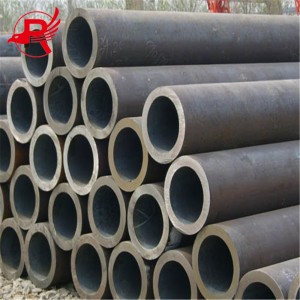
HSS (hollow structural sections, also known as SHS (structural hollow sections), including square, rectangular, circular (tubular), and oval sections)
Angles (L-shaped sections)
Structural channels, C-shaped sections, or "C" sections
T-beams (T-shaped sections)
Bars, which are rectangular in cross-section but not wide enough to be considered plate.
Rods, which are circular or square sections with a length relative to their width.
Plates, which are sheet metal thicker than 6 mm or 1⁄4 inch.

Steel structures use steel as the primary load-bearing component. They are widely used in various fields due to their advantages such as high strength, light weight, fast construction, and good seismic resistance. Its main use cases and application areas include:
Construction Engineering
1. Industrial Buildings - Factories: such as machining, metallurgy, and chemical plants
2. Warehouses: Large logistics and storage centers (such as high-bay warehouses and cold chain warehouses);
3. Civil Buildings - High-rise Buildings: Main frames of super-high-rise buildings (such as skyscrapers);
Public Buildings: Stadiums, exhibition halls, theaters, airport terminals, etc.
3. Residential Buildings: Steel-structured residential buildings
Transportation Infrastructure
1. Bridge Engineering - Long-span bridges - Railway/highway bridges
2. Rail Transit and Stations - High-speed rail stations, subway station concourses - Rail transit vehicles
Special Engineering and Equipment
1. Marine Engineering - Offshore Platforms: Main structures of oil drilling platforms (such as jackets and platform decks);
Shipbuilding
2. Hoisting and Construction Machinery - Cranes - Special vehicles
3. Large Equipment and Containers - Industrial storage tanks - Mechanical equipment frames
Other Special Scenarios
1. Temporary buildings: disaster relief housing, temporary exhibition halls, prefabricated buildings, etc.
2. Glass dome supports for large shopping malls
3. Energy engineering: wind turbine towers (made of rolled high-strength steel plates) and solar panels.

Cutting Process
1. Preparatory Work
Material inspection and verification
Drawing review and understanding
2. Selection of Suitable Cutting Methods
Flame cutting: Ideal for thick mild steel and low‑alloy steel, mainly used for rough machining.
Water jet cutting: Works with a wide range of materials, especially heat‑sensitive steel and high‑precision special‑shaped parts.

Welding Processing
This process bonds steel structural components at the joint using heat, pressure, or both (with filler metal where needed), creating a solid, unified structure. As a key connection method in steel fabrication, it is widely used in construction, bridges, machinery, shipbuilding and other fields, and directly determines the strength, stability and safety of steel structures.
Follow construction drawings or Welding Procedure Qualification Reports (PQR) to clearly define weld type, groove size, weld dimensions, welding position and quality grade.

Punching Processing
This process refers to mechanically or physically drilling holes in steel structural members to meet design requirements. These holes are mainly used for component connection, pipeline installation and fitting assembly. As a key process in steel structure production, it directly ensures the assembly accuracy and connection strength of structural parts.
According to the design drawings, confirm the hole position (coordinate dimensions), quantity, diameter, precision level (e.g. ±1mm tolerance for ordinary bolt holes, ±0.5mm tolerance for high-strength bolt holes) and hole type (round, oblong, etc.). Mark the hole positions on the component surface with marking tools such as steel tape, scriber, square and center punch. For key holes, use a center punch to make positioning points to ensure accurate drilling.

A wide variety of surface treatment processes are available for steel structure building, effectively enhancing their corrosion and rust resistance, as well as their aesthetic appeal.
Galvanizing is a traditional and widely used solution, providing outstanding rust resistance for general steel structures.
Powder coating delivers a wide range of color options and strong weather resistance, making it ideal for outdoor structural members with high appearance requirements.
Epoxy coating offers superior corrosion protection and is specially designed for harsh environments such as coastal and industrial settings.
Epoxy zinc-rich coating provides reliable electrochemical protection due to its high zinc content, suitable for heavy-duty anti-corrosion applications.
Conventional painting is flexible and cost-effective, able to satisfy various decorative and basic protection needs.
Black oil coating serves as an economical choice for simple, short-term corrosion protection requirements.

Our elite team of experienced structural engineers and technical experts possesses extensive project experience and cutting-edge design concepts, with a deep understanding of steel structure mechanics and industry standards.
Utilizing professional design software such as AutoCAD and Tekla Structures, we construct a comprehensive visual design system, from 3D models to 2D engineering plans, accurately representing component dimensions, joint configurations, and spatial layouts. Our services cover the entire project lifecycle, from preliminary schematic design to detailed construction drawings, from complex joint optimization to overall structural verification. We meticulously control details with millimeter-level precision, ensuring both technical rigor and constructability.
We are always customer-focused. Through comprehensive scheme comparison and mechanical performance simulation, we customize cost-effective design solutions for diverse application scenarios (industrial plants, commercial complexes, bridges and plank roads, etc.). While ensuring structural safety, we minimize material consumption and streamline the construction process. We provide comprehensive follow-up services, from drawing delivery to on-site technical briefings. Our professionalism ensures the efficient implementation of every steel structure project, making us a trusted, one-stop design partner.


The packaging method for steel structures is selected based on component type, size, transportation distance, storage environment and protection requirements. Its main purpose is to avoid deformation, rust and damage during transportation and storage.
Common Packaging Methods
Bare Packaging
Suitable for large and heavy steel members, including steel columns, beams and large trusses.
Features: No extra packaging materials, allowing direct lifting and loading. Members must be firmly fixed during transport to prevent movement and collision.
Supplementary protection: Bolt holes, flange surfaces and other connections can be covered with temporary caps or plastic film for protection.
Bundled Packaging
Suitable for large quantities of small and medium-sized regular steel members, such as angle steel, channel steel, steel pipes and small connecting plates.
Note: Bundling must be moderate. Loose bundles may cause parts to shift, while over-tight bundling will result in deformation.
Wooden Box / Wooden Frame Packaging
Suitable for small precision steel components, fragile parts (bolts, nuts, etc.) and steel members for long-distance or export transportation.
Advantages: High-level protection against environmental damage, ideal for long-distance transport and complex storage conditions.
Special Protective Packaging
Corrosion protection: For long-term storage or transport in humid environments, additional anti-rust treatment is required.
Deformation protection: For slender and thin-walled members, extra wooden or steel supports should be installed to avoid bending and deformation caused by uneven loads.

Transportation: Express (Sample Delivery), Air, Rail, Land, Train, Sea shipping (FCL or LCL or Bulk)

Once your steel structure products are delivered, our professional team will provide full support throughout the installation process. We help optimize on-site installation plans, offer technical guidance for key procedures, and work closely with the construction team to ensure efficient and accurate installation, so as to guarantee the stability and safety of your structure.
For after-sales support, we provide customized maintenance recommendations based on product characteristics, and answer all inquiries about material care and structural durability. If any problems occur during use, our after-sales team will respond promptly and resolve issues with professional technical support.

Q: Are u a manufacturer?
A: Yes, w e are spiral steel tube manufacturer located in Tianjin city, China.
Q: Can I have a trial order only several tons?
A: Of course. We can ship the cargo for u with LCL serivece.(Less container load)
Q: If sample free?
A: Sample free, but the buyer pay for the freight.
Q: Are you gold supplier and do trade assurance?
A: We 13 years gold supplier and accept trade assurance.