

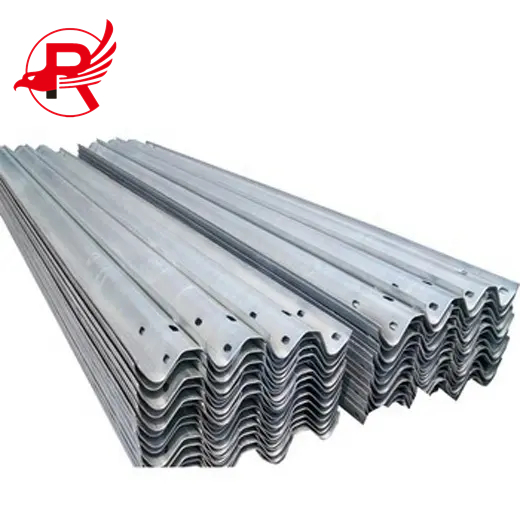
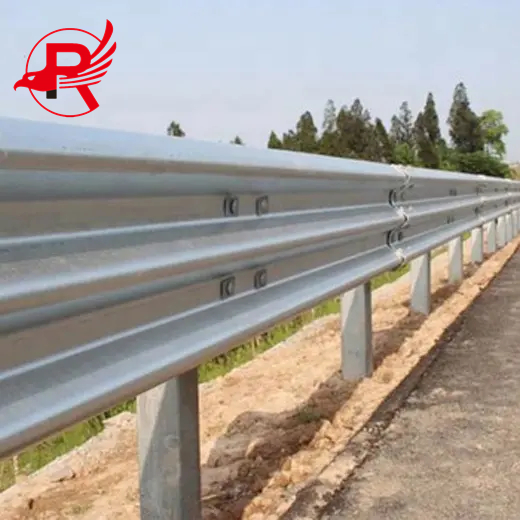
Hot DIP Galvanized W Beam Highway Guardrail Customized Steel Traffic Crash Barrier for Road Safety




|
Name
|
W Beam Guardrail Per AASHTO M180
|
|
Size
|
Effective Length of Beam Section 12.5 ft or 25.0 ft
Can be Customized |
|
Steel Thickness
|
Class A = 2.67MM (0.105 in.)
Class B = 3.43MM (0.135 in.)
Can be customized.
|
|
Surface Treatment
|
Hot Dip Galvanized as per ASTM A653
|
|
Zinc Coating Thickness
|
Type 1 = Zinc coated 550 g/sq. meter minimum single spot
Type 2 = Zinc coated 1100 g/sq. meter minimum single spot
Type 3 =Uncoated Steel
Type 4 = Weathering Steel
Can be customized.
|
|
Free Sample
|
Available
|
|
Production Time:
|
Approximately 7~15 business days.
|
|
Production Capacity
|
60000 Tons/Month
|
|
Warranty
|
2 Years
|
Metal barrier can be used for many purposes, such as the following:
1. Security metal road barrier can be employed to physically guard a property or deny an area access to unauthorized occupants. They are also used in high security areas such as airports, government buildings, and military bases.
2. Vehicle control: metal barrier fencing including bollards, guardrails, and gates, can also be used to shape vehicle flow and stop the possibility of crashes. They are also widely used in parking lots, toll stations as well as in construction areas.


Note:
1.Free sampling, 100% after-sales quality assurance, Support any payment method;
2.All other specifications of round carbon steel pipes are available according to your requirement (OEM&ODM)! Factory price you will get from ROYAL GROUP.
The manufacturing process of steel road barrier is relatively complex, and the general flow is as follows:
1. Design: The initial stage of metal barrier manufacturing is barrier design. Designers use computer-aided design (CAD) software for the design.
2. Material Selection: After the design is completed, suitable barrier materials need to be selected. Commonly used materials include steel, aluminum, and iron.
3. Cutting: After purchasing materials, they need to be cut into the required sizes and shapes. This can be achieved using different cutting equipment, such as waterjet cutting machines, laser cutting machines, or plasma cutting machines.
4. Forming: The cut materials need to undergo bending, rolling, stamping, and other processing to finally achieve the required dimensions.
5. Welding: After the components are formed, they are joined together to form a complete barrier. Various welding methods are used, including arc welding and gas welding.
6. Finishing: After the barrier is welded, surface treatment is required. This may include sandblasting, painting, or powder coating to protect the metal from wind, rain, and corrosion, and to provide a decorative effect.
7. Quality Control: Metal fences undergo a quality control process before shipment to ensure they are sturdy and flawless.
Generally, the production of metal fences is a time-consuming process involving many different steps, requiring qualified personnel with specialized knowledge and appropriate facilities and equipment.
Packaging is generally naked, steel wire binding, very strong.
If you have special requirements, you can use rust proof packaging, and more beautiful.
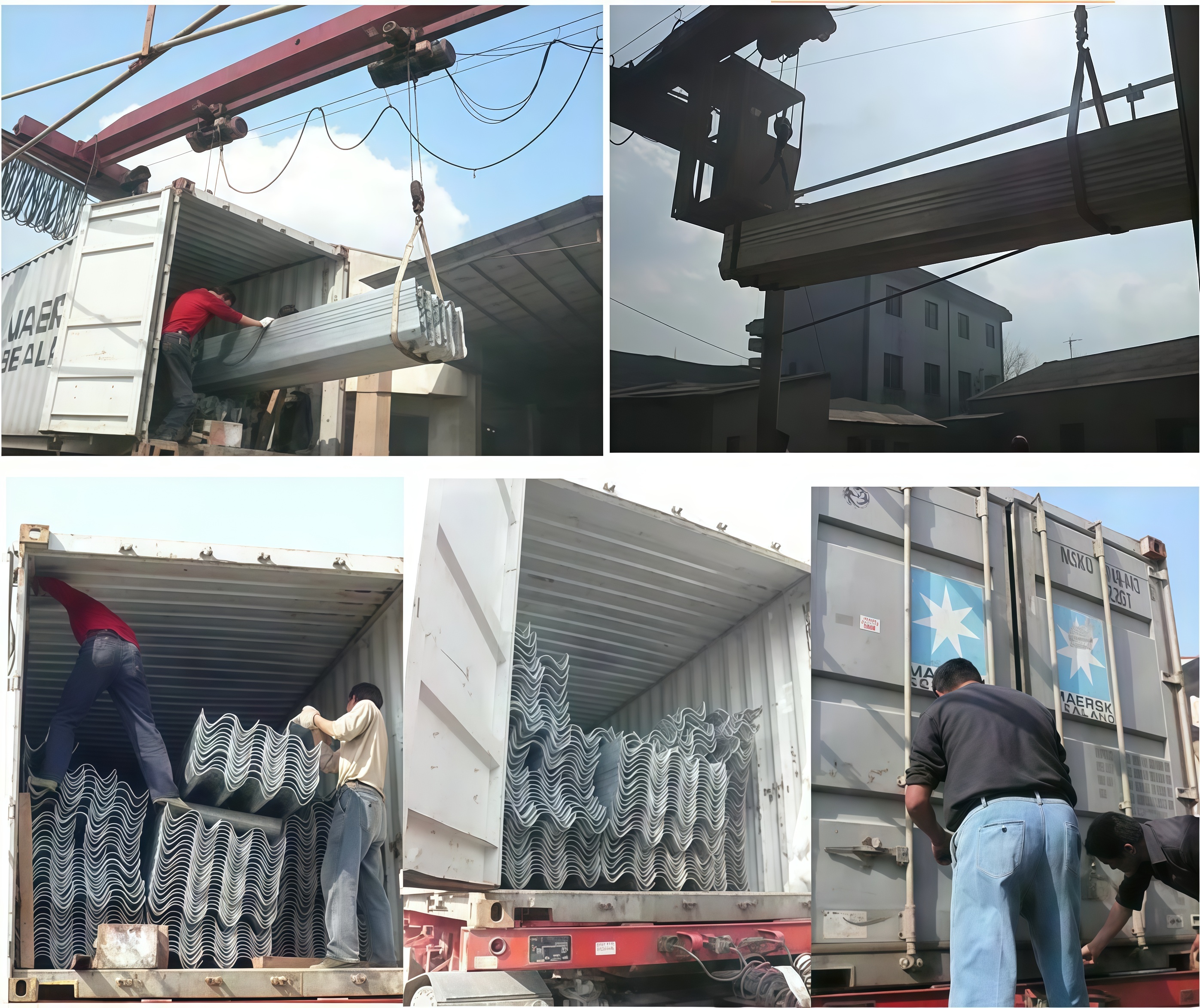
Transportation: Express (Sample Delivery), Air, Rail, Land, Sea shipping (FCL or LCL or Bulk)

1. What are the uses of W-beam metal crash barrier highway guardrails?
W-beam guardrails are used for road safety, absorbing impacts and restricting vehicle movement. They are especially suitable for highways, bridges, and curves to prevent vehicles from veering off the road.
2. What materials are used for W-beam guardrails?
They are typically made of high-strength carbon steel, such as Q235 and Q345, and are best suited for hot-dip galvanizing for long-term protection.
3. Why choose hot-dip galvanizing?
Hot-dip galvanizing is a zinc coating that metallurgically bonds with the steel to form a strong and durable protective layer that prevents the substrate from rusting. It is ideal for outdoor and harsh weather conditions, including coastal areas and other high-humidity regions.
4. Can guardrails be customized? Or can other types of guardrails be customized?
Of course. Customizable options include:
• Length and thickness
• Corrugated (W-beam) design
• Galvanized layer thickness
• Terminal ends and fittings
• Installation system requirements
5. What are the standards for highway guardrails?
Some standards include:
AASHTO M180 (USA)
EN 1317 (European standard for crash barriers)
Local highway safety regulations of the project's country/region
-
Factory Direct Customized Price Steel Galvanize...
-

Fabricated Steel Beam | Custom ASTM A992 &...
-

Galvanized Steel Stairs for Industrial Building...
-

GB Standard Q235/Q235A/Q235B Series Galvanized ...
-

ASTM A36 A572-50 Gusset Plate | Structural Stee...
-

Factory Price ASTM A36 Steel Hot-Dip Galvanized...


