page_banner

Galvanized Mild Steel Square Tube — Complete Procurement Guide


If you're in steel pipe procurement, galvanized square tubes are probably one of the products you deal with most often. But when it comes time to place an order, a lot of buyers still aren't sure: is the zinc coating thick enough? Will it rust after a couple of years? If I push the price down, will the quality hold up? To avoid getting burned, just looking at the quote won't help — you need to know how to judge quality from the tube itself. This guide covers the fundamentals of galvanized square tubes, how to pick them, and how to install them.

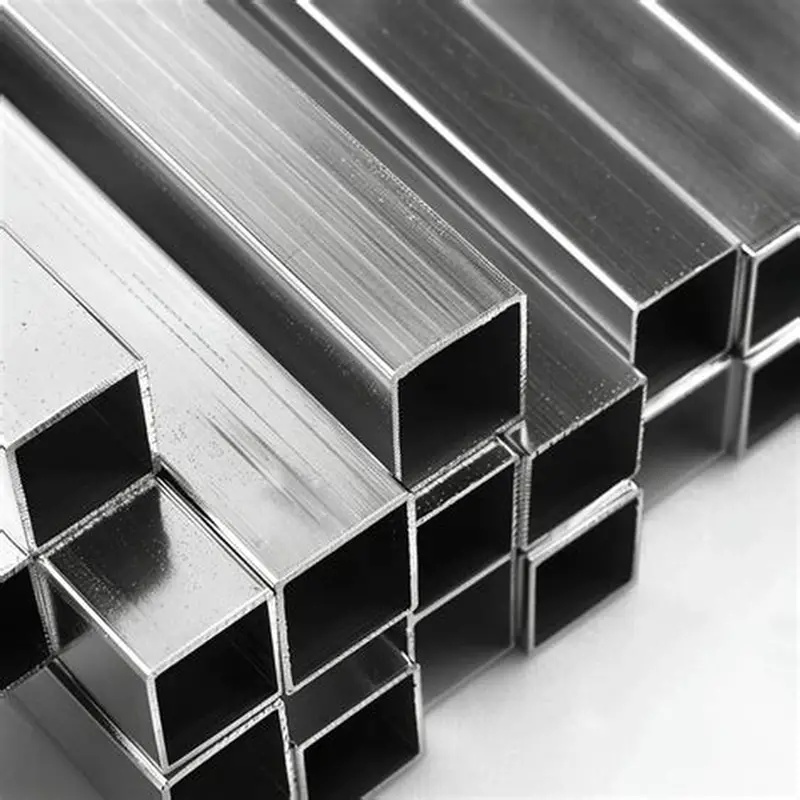
stainless steel square tube
galvanized steel square tube02

First Things First: What Is a Galvanized Mild Steel Square Tube?

Put simply, it's a mild steel tube with a layer of zinc plated onto its surface. The zinc actively blocks corrosion, so the tube is much more rust-resistant than plain steel pipe. Combined with mild steel's decent strength and reasonable price, galvanized square tubes show up almost everywhere — construction, machinery, greenhouses, you name it.

Basic Specifications

Material and Process

The tube is made from mild steel, which has a low carbon content and is relatively easy to weld and machine. Galvanizing uses a hot-dip process — the tube is fully immersed in molten zinc, leaving a uniform protective layer on the surface. This layer doesn't just act as a physical barrier; the zinc itself is "sacrificial" and corrodes first, which is why its rust resistance is far better than paint alone.

Standard Size Range

Outer dimensions: 10×10×0.5 to 1200×1200×60mm; rectangular tubes 10×15×0.5 to 800×1200×60mm
Wall thickness: 0.5–60mm
Length: 0.5–24m

Material Properties

Property Value
Density 7870 kg/m³
Electrical resistivity 1.59 µΩ·m
Melting point 1350–1530 °C
Elastic modulus 200 GPa
Thermal conductivity 45–64.8 W/(m·K)
Thermal expansion coefficient 12.06 µm/(m·K)

In terms of machinability, corrosion resistance and workability are both good, but formability and weldability are on the weaker side — keep that in mind when matching material to your process.

Common Applications
Steel structure frames, shed construction, outdoor buildings, trailer parts, vehicle manufacturing, panel supports, machinery manufacturing, greenhouses, bridge structures, and more.

What Makes It Good

Durable. The zinc layer keeps moisture and corrosive gases out, so the tube doesn't rust easily and lasts much longer than bare steel pipe.

Reliable corrosion protection. The zinc layer is sacrificial — even if the surface gets a small scratch, the surrounding zinc corrodes first instead of letting rust spread inward.

Adequate strength. Mild steel has a decent strength-to-weight ratio, so structural components don't end up unnecessarily heavy. That's the main reason it's used so heavily in construction and manufacturing.

How to Choose: Nine Ways to Spot Low-Quality Tube

Quality varies widely across the market. If you run into any of the following, pay extra attention.

1. Creases on the surface

Creases are folds running lengthwise along the tube. They usually happen when small mills, chasing output, apply excessive reduction during rolling, causing "ear" defects on the billet that become creases in subsequent passes. A tube with creases is prone to cracking when bent, and its strength drops noticeably.

2. Pitting on the surface

Pitting looks like small, uneven craters across the surface. It's caused by badly worn roll grooves. Some unregulated mills cut costs by using roll grooves past their service life — the dimensions are already off, and the tubes come out pitted.

3. Scabs on the surface

Scabs usually come from two sources: uneven material with lots of impurities in the steel, or the mill's guide and protection equipment being too crude and prone to sticking, so impurities scratch the surface during rolling.

4. Cracks on the surface

Cracks are mostly a billet problem. Low-quality tubes often use porous, crude billets that crack under thermal stress during cooling, and the cracks remain after rolling. This kind of tube should never be used in load-bearing structures.

5. Lots of surface scratches

Production lines with crude equipment tend to produce burrs, which scratch the tube surface as it moves through the line. Shallow scratches affect appearance; deep ones directly reduce strength, especially in areas under tension — inspect those carefully.

6. Dull color, slightly reddish

A normal galvanized tube has a metallic luster. Low-quality tube looks dull, even slightly reddish. The root cause is rolling temperature not meeting standard — small mills estimate temperature by eye and can't guarantee rolling within the specified austenite range, so the steel's properties naturally fall short.

7. Thin, low transverse ribs

Look at the tube's transverse ribs. If they're thin and low, it's usually from incomplete filling. This affects the tube's interlock and load-bearing performance, which is a real hazard when used as a structural component.

8. Oval cross-section

A square tube's cross-section should be, well, square. If it's oval, the mill often cut corners by reducing thickness too aggressively in the first two finishing passes — the result is lower strength and outer dimensions that don't meet standard.

9. Uneven cut ends

Good material uses uniform steel and a flying shear with enough tonnage, so the cut end is smooth and even. Low-quality tube often has chips falling off the cut end, an uneven surface, and little metallic luster. Also, some mills have poor cutting processes, leaving obvious bulges at the head and tail ends — you can spot this just by looking at both ends when receiving goods.

Installation and Maintenance

During installation, pick the right connectors and fasteners. Don't force or hammer them — chipping off the zinc layer is basically opening a door for corrosion.

Once it's in service, periodically check for dents, zinc loss, and rust spots. If you find any, touch up with paint promptly. Also clean off dust and debris from the surface, especially in humid environments — trapped grime accelerates corrosion.

How to Think About Cost

Compared with untreated mild steel pipe, galvanized square tube does cost more upfront. But over the long run, it lasts longer and needs less maintenance, so the total cost of ownership is actually lower. When procuring, don't just compare price per ton — factor in service life and maintenance costs to get the real picture.

Wrap-Up

Galvanized square tube is well suited for applications that demand strength, durability, and corrosion resistance. The zinc layer prevents rust and extends service life — that's its core value. When buying, don't just look at the price. Run through the identification methods above, and you'll avoid most of the low-quality product out there.

Do You Require Galvanized Square Tubing
For Your Next Project?


Post time: Aug-21-2026
Write your message here and send it to us