

Royal Group, founded in 2012, is a high-tech enterprise focusing on the development, production and sales of architectural products. Our headquarter is located in Tianjin, the national central city and the birthplace of "Three Meetings Haikou". We also has branches in major cities across the country.

Carbon steel pipe is a common pipe material primarily composed of carbon and iron, widely used in industry. Due to its excellent stability, strength, and corrosion resistance, it is often used in the petroleum, chemical, and construction industries.
Based on the production process, carbon steel pipe is primarily categorized as welded pipe and seamless pipe. Welded pipe is made by welding steel plates or strips together, offering high production efficiency and low cost. It is commonly used for general low-pressure fluid transportation, such as building water supply and drainage piping. Seamless pipe is manufactured from solid billets through processes such as piercing, hot rolling, and cold rolling. Its wall is free of welds, resulting in improved strength and sealing, allowing it to withstand higher pressures and harsh environments. High-pressure pipelines in the petrochemical industry, for example, are often used for seamless pipe.


By appearance, carbon steel pipes come in round and rectangular forms. Round tubes are evenly stressed, providing minimal resistance to fluid transport. Square and rectangular tubes are widely used in building structures and machinery manufacturing, providing stable support structures. Different types of carbon steel pipes play an indispensable role in various engineering projects.
OUR CARBON STEEL PIPES


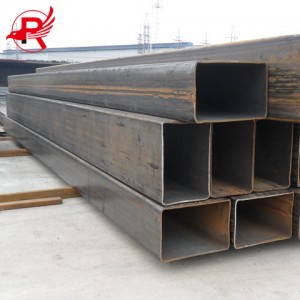


We offer a full range of carbon steel products, from pipes to plates, coils to profiles, to meet the needs of your diverse projects.
Galvanized steel pipes are made from a metallic steel pipe with a zinc coating formed on the surface through hot-dip galvanizing or electroplating. Combining the high strength of steel with the excellent corrosion resistance of the zinc coating, they are widely used in construction, energy, transportation, and machinery manufacturing. Their core advantage lies in the fact that the zinc coating isolates the base material from corrosive media through electrochemical protection, significantly extending the pipe's service life while preserving the steel's mechanical properties to meet the structural load-bearing requirements of various scenarios.
Galvanized Round Steel Pipe
Cross-sectional Characteristics: Circular cross-section offers low fluid resistance and uniform pressure resistance, making it suitable for fluid transportation and structural support.
Common Materials:
Base Material: Carbon steel (such as Q235 and Q235B, moderate strength and cost-effective), low-alloy steel (such as Q345B, high strength, suitable for heavy-duty applications); stainless steel base materials (such as galvanized 304 stainless steel, offering both acid and alkali resistance and aesthetics) are available for special applications.
Galvanized Layer Materials: Pure zinc (hot-dip galvanizing with a zinc content of ≥98%, a zinc layer thickness of 55-85μm, and a corrosion protection period of 15-30 years), zinc alloy (electroplated zinc with a small amount of aluminum/nickel, a thickness of 5-15μm, suitable for light-duty indoor corrosion protection).
Common Sizes:
Outer Diameter: DN15 (1/2 inch, 18mm) to DN1200 (48 inches, 1220mm), Wall Thickness: 0.8mm (thin-wall decorative pipe) to 12mm (thick-wall structural pipe).
Applicable Standards: GB/T 3091 (for water and gas transportation), GB/T 13793 (straight seam electric-welded steel pipe), ASTM A53 (for pressure piping).


Galvanized Steel Square Tube
Cross-sectional Characteristics: Square cross-section (side length a×a), strong torsional rigidity, and easy planar connection, commonly used in frame structures.
Common Materials:
The base is primarily Q235B (meets the load-bearing requirements of most buildings), with Q345B and Q355B (higher yield strength, suitable for earthquake-resistant structures) available for high-end applications.
The galvanizing process is primarily hot-dip galvanizing (for outdoor use), while electrogalvanizing is often used for indoor decorative guardrails.
Common Sizes:
Side Length: 20×20mm (small shelves) to 600×600mm (heavy steel structures), wall thickness: 1.5mm (thin-wall furniture tube) to 20mm (bridge support tube).
Length: 6 meters, custom lengths of 4-12 meters are available. Special projects require advance reservation.
Galvanized Steel Rectangular Tube
Cross-sectional Characteristics: Rectangular cross-section (side length a×b, a≠b), with the long side emphasizing bending resistance and the short side conserving material. Suitable for flexible layouts.
Common Materials:
The base material is the same as the square tube, with Q235B accounting for over 70%. Low-alloy materials are used for special load scenarios.
The galvanizing thickness is adjusted according to the operating environment. For example, hot-dip galvanizing in coastal areas requires ≥85μm.
Common Sizes:
Side Length: 20×40mm (small equipment bracket) to 400×800mm (industrial plant purlins). Wall Thickness: 2mm (light load) to 25mm (extra thick wall, such as port machinery).
Dimensional Tolerance: Side Length Error: ±0.5mm (high-precision tube) to ±1.5mm (standard tube). Wall Thickness Error: Within ±5%.

We offer a full range of carbon steel products, from pipes to plates, coils to profiles, to meet the needs of your diverse projects.
Stainless steel pipe is a metal pipe that combines corrosion resistance, high strength, hygiene and environmental protection. It covers various types such as seamless pipes and welded pipes. It is widely used in construction engineering, chemical and pharmaceutical, energy transportation and other fields.
From a production perspective, stainless steel round tubes are primarily categorized into seamless tubes and welded tubes. Seamless tubes are manufactured through processes such as perforation, hot rolling, and cold drawing, resulting in no welded seams. They offer greater overall strength and pressure resistance, making them suitable for applications such as high-pressure fluid transportation and mechanical load-bearing. Welded tubes are made from stainless steel sheets, rolled into shape, and then welded. They boast high production efficiency and relatively low cost, making them widely used in low-pressure transportation and decorative applications.


Cross-sectional dimensions: Square tubes range in side length from miniature 10mm×10mm tubes to large-diameter 300mm×300mm tubes. Rectangular tubes commonly come in sizes such as 20mm×40mm, 30mm×50mm, and 50mm×100mm. Larger sizes can be used for supporting structures in large buildings. Wall Thickness Range: Thin-walled tubes (0.4mm-1.5mm thick) are primarily used in decorative applications, featuring lightweight and easy processing. Thick-walled tubes (2mm thick and above, with some industrial tubes reaching 10mm and above) are suitable for industrial load-bearing and high-pressure transportation applications, offering greater strength and pressure-bearing capacity.

In terms of material selection, stainless steel round tubes are mostly made from mainstream stainless steel grades. For example, 304 is commonly used for food processing piping, building handrails, and household utensils. 316 stainless steel round tubes are often used in coastal construction, chemical pipelines, and ship fittings.
Economic stainless steel round tubes, such as 201 and 430, are primarily used in decorative guardrails and light-load structural parts, where corrosion resistance requirements are lower.
OUR STAINLESS STEEL PIPES


